Amigurumi Critters - 25 Imaginative Crochet Designs
Amigurumi Critters - 25 Imaginative Crochet Designs — a practical crochet book guide from Sara Rain Crochet.
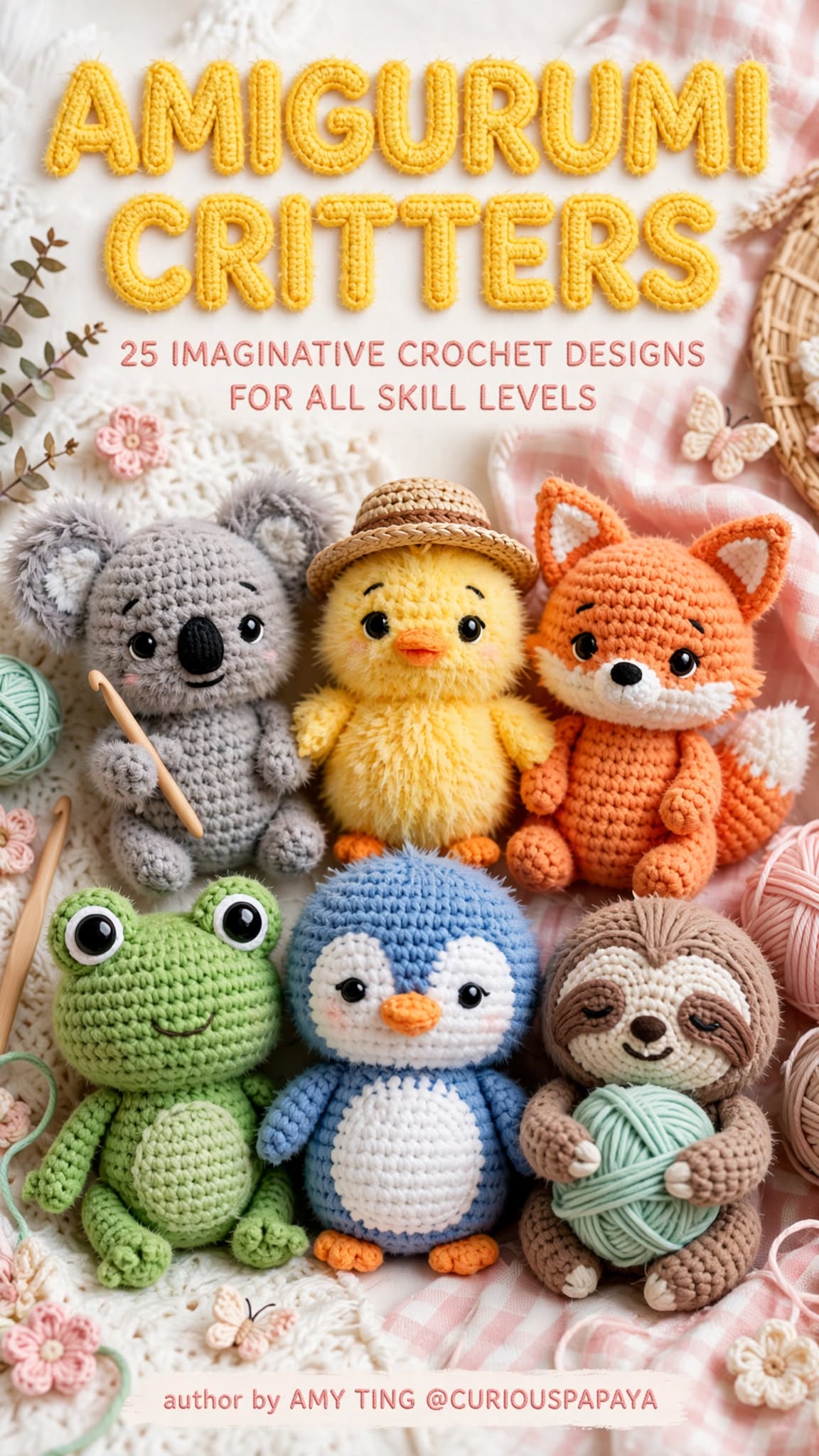
A look at the 25-design collection by Amy Ting, plus practical advice for choosing a project that matches your amigurumi skills.
A multi-pattern amigurumi book can be useful after you understand the basic construction of crocheting in rounds, shaping with increases and decreases, stuffing, and sewing parts together.
Amigurumi Critters has 25 imaginative crochet designs for all skill levels — koala, chick with hat, fox, frog with big eyes, penguin, sloth hugging yarn, and so many more. The photos are so soft and cozy, and the author Amy Ting @CURIOUSPAPAYA writes patterns that actually make sense for beginners.
A sensible approach is to start with the simpler-looking critters and work toward designs with more shaping and assembly. Perfect for gifts, market tables, or just building your amigurumi shelf.
#ad #amazonfinds #amigurumi #crochetbook #crochetforbeginners
As an Amazon Associate I earn from qualifying purchases. This page contains an affiliate link; purchasing through it may support the free patterns on this site at no extra cost to you.
Full review + my affiliate link on the blog: sararaincrochet.com
📚 Check Price on Amazon →Takes you to Amazon — affiliate link helps support my free patterns at no extra cost to you
Why I love this book
- 25 Designs: From koala, chick, fox, frog, penguin, sloth to so many more critters
- All Skill Levels: Starts beginner friendly, grows with you
- Clear Photos: Soft, cozy styling — easy to follow
- Author: Amy Ting @CURIOUSPAPAYA — beloved amigurumi designer
- Perfect For: Gifts, kids, market prep, learning amigurumi
How to choose your first pattern from a crochet book
Start by scanning the pattern for techniques you already know. A small project is not automatically an easy project: tiny limbs, frequent color changes and many sewn pieces can require more precision than a larger simple shape.
A useful progression
- First: one main body with minimal sewing
- Next: separate ears, arms or legs
- Then: controlled color changes and embroidered details
- Later: complex shaping, many components or unusual stitches
Keep results consistent
Use a stitch marker in continuous rounds, record the hook and yarn used, and count each completed round. Stuff in small amounts and compare paired pieces before assembly. These habits matter more than rushing to finish a character.
Book-buying check
Preview the current edition and seller description for terminology, chart/photo support, difficulty information and whether the patterns use US or UK crochet terms. Editions and listings can change, so verify those details before purchasing.
How to choose your first pattern from a 25-design book
Do not start with the most elaborate character automatically. For a first project, scan the construction notes and choose a design with a simple body, few color changes and a small number of sewn pieces. Save patterns with elaborate clothing or many tiny appendages until basic shaping feels comfortable.
Skills to look for
- Magic ring or another clearly explained starting method
- Single crochet in continuous or joined rounds
- Increase and decrease placement
- Stitch counts after shaping rounds
- Stuffing and assembly guidance
How to read a shaping round
Identify the repeat and expected total before crocheting. If your count differs at the end of an increase or decrease round, correct it immediately; a shaping error becomes much harder to locate several rounds later.
Use the collection as a progression
After one simple character, choose a second that adds only one new challenge, such as a color change, embroidered feature or extra pair of limbs. This turns a multi-pattern collection into structured practice.
Before buying
Check the current edition, format, terminology, difficulty information and whether corrections or supplemental resources are available. A large pattern count is useful only when the instructions suit the way you learn.

Choose your first project by technique rather than appearance alone. Fewer separate pieces, simple color changes and clear round counts usually make for a smoother early amigurumi project.